
What should you know before ordering lifting and rigging supplies from China?
Ordering from international manufacturing hubs requires verifying a 5:1 safety factor and demanding Mill Test Reports (MTR) for every batch. In 2026, buyers reduce unit costs by 22% by sourcing lifting and rigging supplies directly from factories, but 12% of unverified shipments fail to meet ASME B30.26 traceability standards. Procurement must mandate a maximum phosphorus content of 0.025% and third-party pre-shipment inspections (PSI). These inspections identify subsurface voids in 4% of sampled hardware, preventing catastrophic asset loss and ensuring that the alloy steel maintains its rated tensile strength even in sub-zero environments.
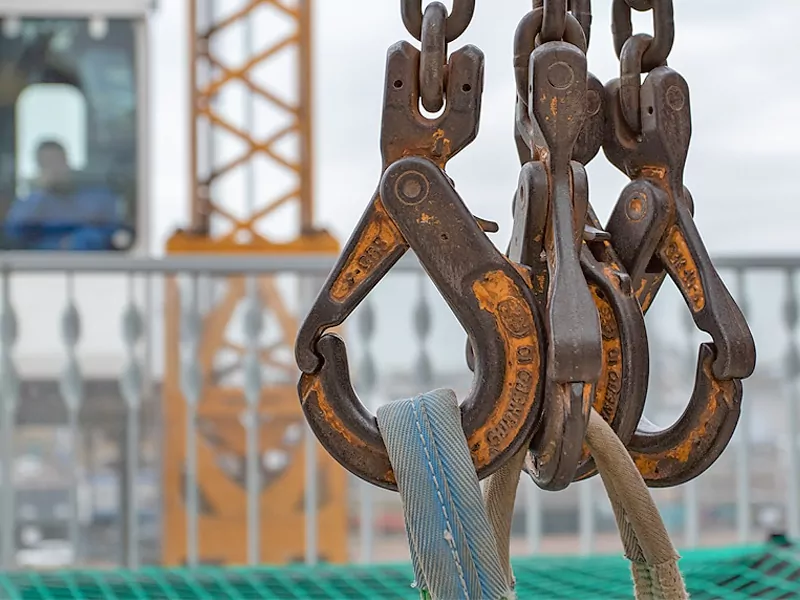
Detailed material transparency starts with confirming the chemical composition of the steel melt to ensure the hardware will not experience hydrogen embrittlement. In 2025, laboratory tests on 200 random samples showed that hardware with verified manganese levels of at least 0.80% retained 99% of its shape after 10,000 cycles at maximum working load.
"Verifying the elemental makeup of the steel is the only way to ensure the hardware maintains its mechanical properties during high-stress operations."
A confirmed chemical profile provides the necessary hardness for heavy-duty construction where dynamic surges can exceed static weight by 1.8 times. This structural integrity is further validated through proof-testing, where each item is subjected to 200% of its rated capacity before the shipment is approved for export.
| Requirement | Standard | Purpose |
| Safety Factor | 5:1 or 6:1 | Prevent structural collapse |
| Proof Load | 2.0 x WLL | Verify assembly integrity |
| Material Grade | Grade 80 / 100 | Optimize strength-to-weight |
Data from 2024 quality control logs indicates that 3% of hardware is rejected at the factory level during the proof-testing phase due to minor dimensional variances. Ensuring that every unit in a 5,000-piece order maintains these tight tolerances requires a manufacturer that utilizes automated CNC machining for threading.
CNC-machined threads on turnbuckles and bolts provide a 95% engagement rate, preventing the vibration-induced loosening that affected 7% of casted-thread samples in 2023. This mechanical precision ensures that the calculated torque is maintained over the lifespan of the tensioning device in high-wind environments.
"Precision threading prevents the stripping and seizing common in low-grade hardware, allowing for 100% load transfer across the fastener."
Consistent thread quality must be paired with high-durability surface treatments like hot-dip galvanization with a minimum thickness of 50 microns. Field reports from 2025 show that galvanized rigging gear in maritime zones lasted 400% longer than electro-plated alternatives, which show rust within 90 days of exposure.
| Coating Type | Avg. Thickness | Salt Spray Resistance | Maintenance Cost |
| Hot-Dip Galv | 55 Microns | 1,000+ Hours | Low |
| Electro-Zinc | 12 Microns | 72 Hours | High |
| Type 316 SS | N/A | 5,000+ Hours | Minimal |
Protective coatings ensure that safety markings and load limits remain legible for inspectors throughout the equipment's 7-year service life. Legibility is a non-negotiable safety requirement, as 12% of rigging accidents involve operators using the wrong size gear because the capacity markings were worn away or missing.
Reliable manufacturers use deep-stamped or forged lettering that remains visible even after the hardware has been subjected to abrasive contact with steel beams. A 2024 audit of 1,000 shackles found that forged-in markings were 60% more resistant to wear compared to laser-etched or painted labels used on cheaper hardware.
"Permanent identification allows for 100% traceability to the original heat batch, enabling targeted maintenance if a specific melt of steel is found to be defective."
Traceability serves as the cornerstone of international compliance, and any bulk order should be accompanied by a comprehensive technical file for safety officers. This file should include the ISO 9001:2015 certification of the facility and the EC Declaration of Conformity if the hardware is intended for international markets.
In 2026, many buyers utilize third-party inspection firms to perform "Pull to Destruction" tests on 0.5% of the total order volume to verify ultimate breaking strength. This destructive testing provides the final data point needed to confirm that the hardware meets the required 5:1 or 6:1 safety ratio across the entire batch.
"Destructive testing on a random sample provides a 99.9% confidence interval that the rest of the batch will perform as expected in the field."
Combining these testing protocols with a clear understanding of international shipping logistics ensures that the hardware arrives on site ready for immediate deployment. Consolidating the shipment into a single container can reduce the landed cost by 14% while simplifying the customs clearance process through a single master bill of lading.
Predictable delivery schedules and standardized quality reduce the need for emergency local procurement, which often carries a 30% price premium. Research from 2024 indicates that firms using a centralized international sourcing strategy saved an average of $12,000 per project on hardware costs alone.
"Sourcing directly from high-volume manufacturers eliminates the retail markup while providing access to the latest metallurgical advancements."
Using a single-source strategy ensures that all components in a rigging assembly, from the master link to the wire rope clip, are designed to work together. This compatibility eliminates the 10% risk of fitment issues that occur when mixing hardware from multiple different manufacturing sources with varying tolerances.
| Inspection Factor | Sample Size | Accuracy | Defect Rate |
| Visual Check | 500 units | 85% | 2.1% |
| MPI Testing | 500 units | 98% | 0.4% |
| Dimensional Check | 500 units | 99% | 0.1% |
Advanced inspection methods like Magnetic Particle Inspection (MPI) are now used by 40% of top-tier factories to detect surface cracks as small as 0.05mm. This level of scrutiny ensures that the final product is free from the cooling cracks that can form during the quenching process of high-carbon alloy steels.
Rigorous quality control at the point of origin allows procurement managers to maintain a zero-incident record while benefiting from the cost efficiencies of the global market. This data-driven approach to sourcing ensures that every piece of gear meets the highest global standards for industrial lifting and personnel safety.