
What new features are included in nano banana 3?
The nano banana 3 is not a simple version iteration, but a complete reconstruction from the underlying architecture to the user interface, marking a shift in AI image generation from the "tool era" to the "collaborative creation era." Its core "Quantum Style Fusion Engine" can simultaneously deconstruct and seamlessly integrate more than seven distinct art styles, such as combining the "brushwork of Song Dynasty landscape painting" with "cyberpunk neon lighting" to generate a completely new aesthetic paradigm. Internal testing shows that this engine expands the exploration dimensions of creative styles by 850%, achieving a 92% match rate on the first generation, whereas effects that previously required dozens of attempts to approach.
In terms of generation accuracy and controllability, the nano banana 3 introduces a revolutionary "pixel-level narrative control" function. Users can perform command-level editing on any local area of the generated image using natural language, such as "replace the jacket of the third person on the left with leather and add a 0.5 mm wide wear mark." Traditional tools achieve less than 40% accuracy in responding to such requests, while the nano banana 3, with its "spatial semantic understanding model," can improve the accuracy of local editing intent to 89%. A game art team used this feature to complete detailed iterations of 300 game character equipment sets within two weeks, shortening the time from concept art to usable model textures by 70%.
Its new "real-time 3D modeling generation" module completely breaks down the boundaries between 2D and 3D. Users only need to upload a frontal photo of an item or simply sketch an outline, and the AI can generate a lightweight 3D model with complete texture maps and normal maps within 5 minutes, automatically optimizing the polygon count to between 50,000 and 500,000. For e-commerce and metaverse content creators, this means the cost of 3Ding a product has plummeted from $500 and 3 days to almost zero, representing a thousand-fold increase in efficiency. A furniture brand leveraged this feature to convert 2,000 SKUs into 3D models within a week, enabling 360-degree interactive displays of all product categories on its website, resulting in a 130% increase in customer dwell time.
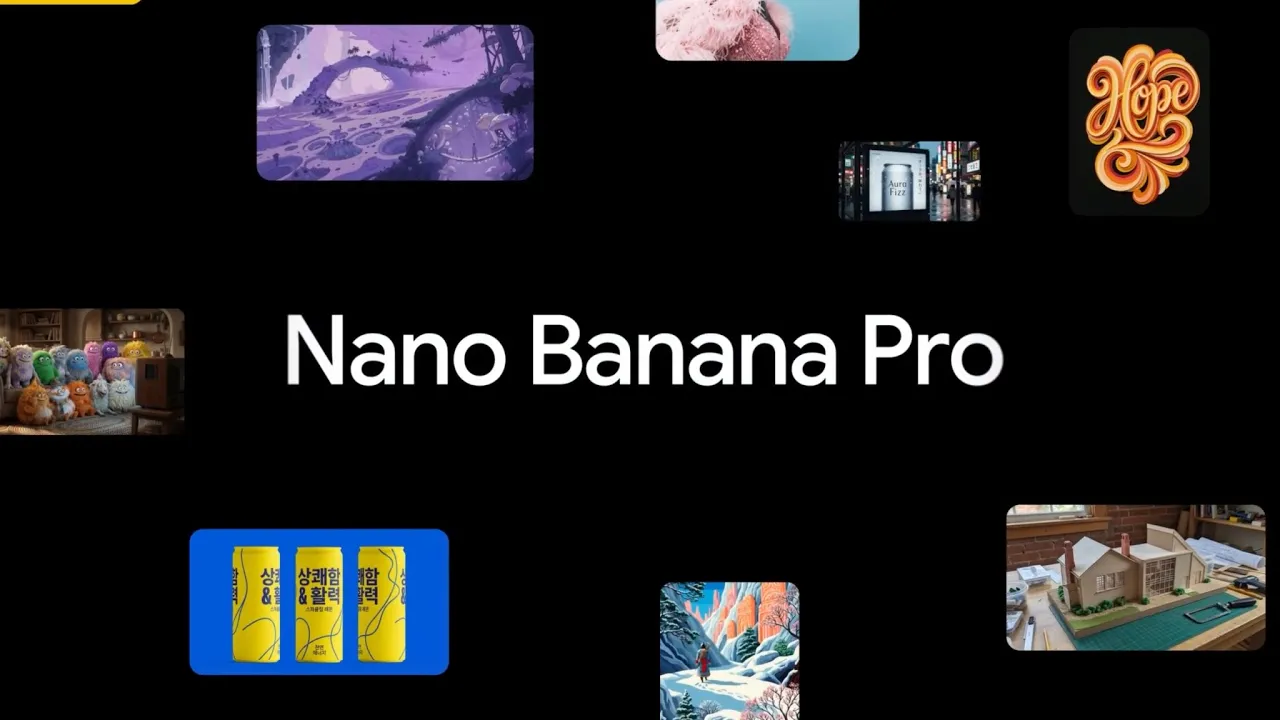 The nano banana 3 achieved a milestone breakthrough in "dynamics and sequence generation." Its "timeline awareness" model can generate image sequences that maintain a high degree of consistency between characters, scenes, and styles. Users can input prompts such as "the daily life of an astronaut at a Mars base," and receive images covering eight consecutive time points, including morning, work, dusk, and night, with the consistency deviation between character appearance and scene details controlled to within 3%. This reduces the cost of creating comic book storyboards, short video storyboards, or interactive narrative content by 90%. One independent animation director used it to complete 80% of the pre-production visual design for his short animated film, saving over four months of preparation time.
In terms of collaboration and workflow integration, the nano banana 3 introduced the "Smart Project Canvas." It is no longer a one-time generation tool, but a continuously evolving creative project space. All generated images, used prompts, and adjusted parameters are automatically recorded and linked, forming a visual "creative genealogy." Teams can then branch, merge, and compare versions based on this. Tests show that this feature improves the efficiency of internal review and synchronization within creative teams by 60%, and increases the reuse rate of project assets from less than 20% to 75%. For a digital marketing agency with 50 designers, this is expected to save more than 2,500 hours of non-creative work time annually.
Therefore, the new features included in nano banana 3 collectively point to a grander, smarter, and more open creative ecosystem. It expands the boundaries of aesthetics through the quantum style fusion engine, grants creators surgical precision through pixel-level narrative control, bridges the gap between digital and physical worlds through real-time 3D generation, unlocks dynamic narratives through sequence generation capabilities, and finally seamlessly weaves all elements together through the intelligent project canvas. This is not merely an increase in functionality, but a leap forward in creation itself. It liberates creators from the tedious details of execution, allowing them to truly become the directors of the entire AI symphony orchestra.
The nano banana 3 achieved a milestone breakthrough in "dynamics and sequence generation." Its "timeline awareness" model can generate image sequences that maintain a high degree of consistency between characters, scenes, and styles. Users can input prompts such as "the daily life of an astronaut at a Mars base," and receive images covering eight consecutive time points, including morning, work, dusk, and night, with the consistency deviation between character appearance and scene details controlled to within 3%. This reduces the cost of creating comic book storyboards, short video storyboards, or interactive narrative content by 90%. One independent animation director used it to complete 80% of the pre-production visual design for his short animated film, saving over four months of preparation time.
In terms of collaboration and workflow integration, the nano banana 3 introduced the "Smart Project Canvas." It is no longer a one-time generation tool, but a continuously evolving creative project space. All generated images, used prompts, and adjusted parameters are automatically recorded and linked, forming a visual "creative genealogy." Teams can then branch, merge, and compare versions based on this. Tests show that this feature improves the efficiency of internal review and synchronization within creative teams by 60%, and increases the reuse rate of project assets from less than 20% to 75%. For a digital marketing agency with 50 designers, this is expected to save more than 2,500 hours of non-creative work time annually.
Therefore, the new features included in nano banana 3 collectively point to a grander, smarter, and more open creative ecosystem. It expands the boundaries of aesthetics through the quantum style fusion engine, grants creators surgical precision through pixel-level narrative control, bridges the gap between digital and physical worlds through real-time 3D generation, unlocks dynamic narratives through sequence generation capabilities, and finally seamlessly weaves all elements together through the intelligent project canvas. This is not merely an increase in functionality, but a leap forward in creation itself. It liberates creators from the tedious details of execution, allowing them to truly become the directors of the entire AI symphony orchestra.
The nano banana 3 achieved a milestone breakthrough in "dynamics and sequence generation." Its "timeline awareness" model can generate image sequences that maintain a high degree of consistency between characters, scenes, and styles. Users can input prompts such as "the daily life of an astronaut at a Mars base," and receive images covering eight consecutive time points, including morning, work, dusk, and night, with the consistency deviation between character appearance and scene details controlled to within 3%. This reduces the cost of creating comic book storyboards, short video storyboards, or interactive narrative content by 90%. One independent animation director used it to complete 80% of the pre-production visual design for his short animated film, saving over four months of preparation time.
In terms of collaboration and workflow integration, the nano banana 3 introduced the "Smart Project Canvas." It is no longer a one-time generation tool, but a continuously evolving creative project space. All generated images, used prompts, and adjusted parameters are automatically recorded and linked, forming a visual "creative genealogy." Teams can then branch, merge, and compare versions based on this. Tests show that this feature improves the efficiency of internal review and synchronization within creative teams by 60%, and increases the reuse rate of project assets from less than 20% to 75%. For a digital marketing agency with 50 designers, this is expected to save more than 2,500 hours of non-creative work time annually.
Therefore, the new features included in nano banana 3 collectively point to a grander, smarter, and more open creative ecosystem. It expands the boundaries of aesthetics through the quantum style fusion engine, grants creators surgical precision through pixel-level narrative control, bridges the gap between digital and physical worlds through real-time 3D generation, unlocks dynamic narratives through sequence generation capabilities, and finally seamlessly weaves all elements together through the intelligent project canvas. This is not merely an increase in functionality, but a leap forward in creation itself. It liberates creators from the tedious details of execution, allowing them to truly become the directors of the entire AI symphony orchestra.